


Are you a B2B buyer frustrated by inconsistent vinyl flooring shipments? It’s a common issue that can severely impact your business. As Jessica from CloudsFlooring, I understand this challenge deeply.
To ensure product consistency across batches, B2B buyers of vinyl flooring must implement detailed purchase orders, effectively utilize retained batch samples for comparison, and establish clear quality tolerance limits with their Chinese suppliers upfront.

Achieving consistent product quality is paramount for your business. Let’s explore practical strategies to help you maintain high standards with every order.
What detailed specifications should be included in purchase orders to minimize variations in vinyl flooring?
Do new shipments sometimes leave you wondering if you received the right product? Even minor variations can cause significant problems, especially when you’re rebranding and distributing.
To minimize variations in vinyl flooring, your purchase orders must include highly detailed specifications. This ensures both you and your supplier clearly understand the exact requirements for each batch.
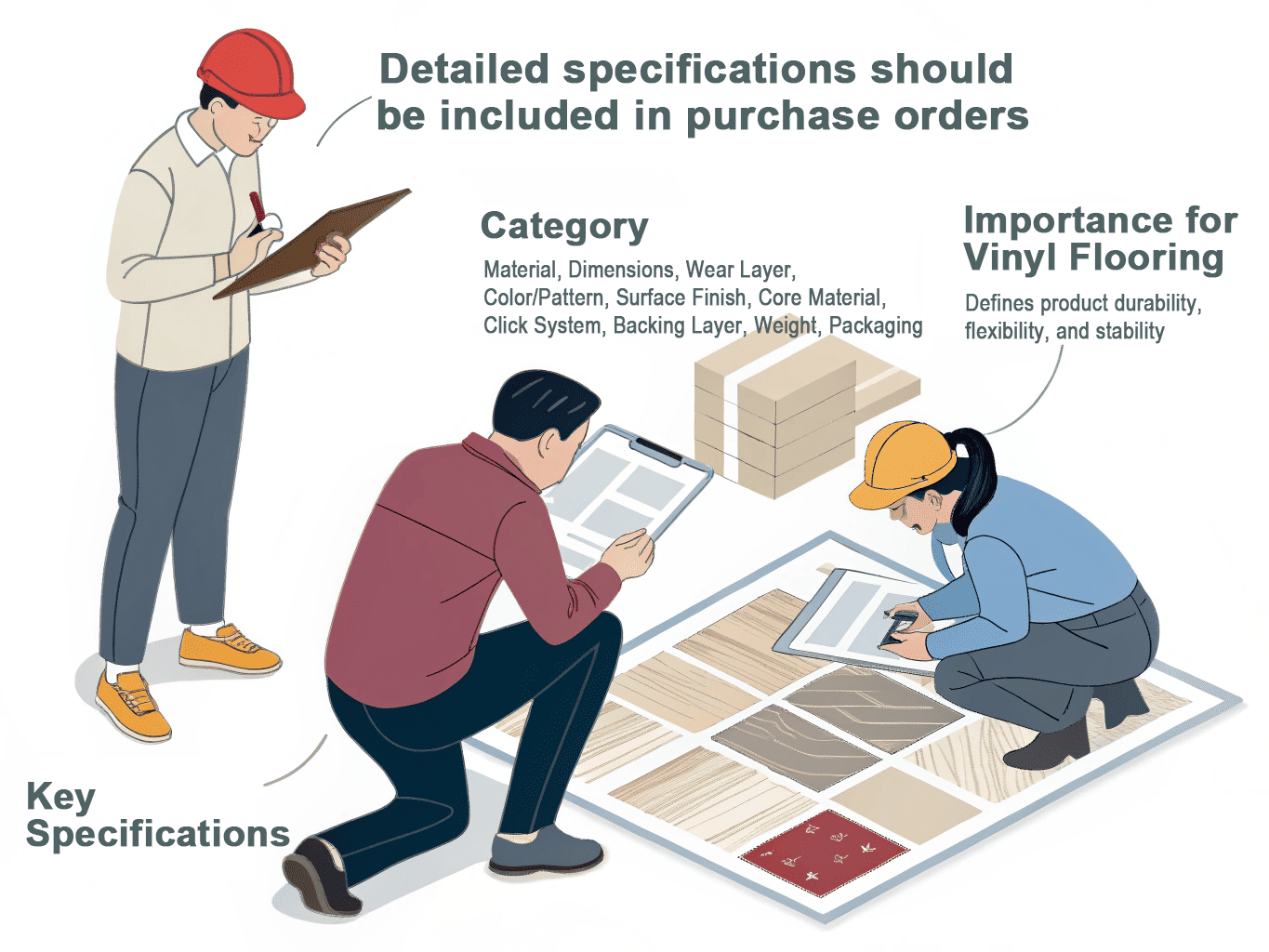
It’s not enough to just list a product name. You need to specify every detail, from the raw materials to the final finish. For LVT and SPC flooring, the wear layer thickness is crucial; slight differences impact durability. Color consistency, especially for wood grain or stone patterns, is also vital for brand integrity. Consider Aiden in the UK, who values quality and rebranding. He needs consistent "rustic oak" LVT across all orders. Even the click-lock mechanism on SPC flooring demands precise specifications for easy installation for his customers.
My factory, CloudsFlooring, always advises clients to be extremely specific. We use comprehensive internal checklists to match these specifications, ensuring consistent quality. This structured approach helps prevent misinterpretations and ensures the product meets your exact standards upon arrival.
Here is a table detailing key specifications:
| Category | Key Specifications | Importance for Vinyl Flooring |
|---|---|---|
| Material | Virgin PVC, recycled content %, stone powder ratio | Defines product durability, flexibility, and stability |
| Dimensions | Plank/tile Length, Width, Total Thickness (mm) | Essential for seamless installation and visual uniformity |
| Wear Layer | Thickness (mils/mm), Type (UV, ceramic bead) | Determines product lifespan and scratch resistance |
| Color/Pattern | Pantone codes, digital pattern files, gloss level | Ensures visual consistency and brand recognition |
| Surface Finish | Embossing (EIR), Texture depth, Anti-slip rating | Affects feel, safety, and aesthetic appeal |
| Core Material | Density (g/cm³), rigidity, composition (SPC, WPC) | Impacts indentation resistance and overall product integrity |
| Click System | Profile manufacturer, specific locking design | Crucial for easy, secure, and long-lasting installation |
| Backing Layer | Type (EVA, IXPE), Thickness (mm) | Affects sound absorption, comfort, and subfloor integration |
| Weight | Per square meter/foot (kg/lbs) | An indicator of material density and overall quality |
| Packaging | Box dimensions, quantity per box, palletization, labeling | Protects products during transit and aids logistics |
How effective are retained batch samples for comparing consistency between different vinyl flooring shipments from China?
Do you ever get a new shipment and just have a gut feeling it doesn’t quite match the last one? That intuition is important, and you can verify it.
Retained batch samples are highly effective for comparing consistency across different vinyl flooring shipments from China. They provide a tangible, physical benchmark, allowing for direct visual and tactile inspection of new deliveries against previously approved quality.
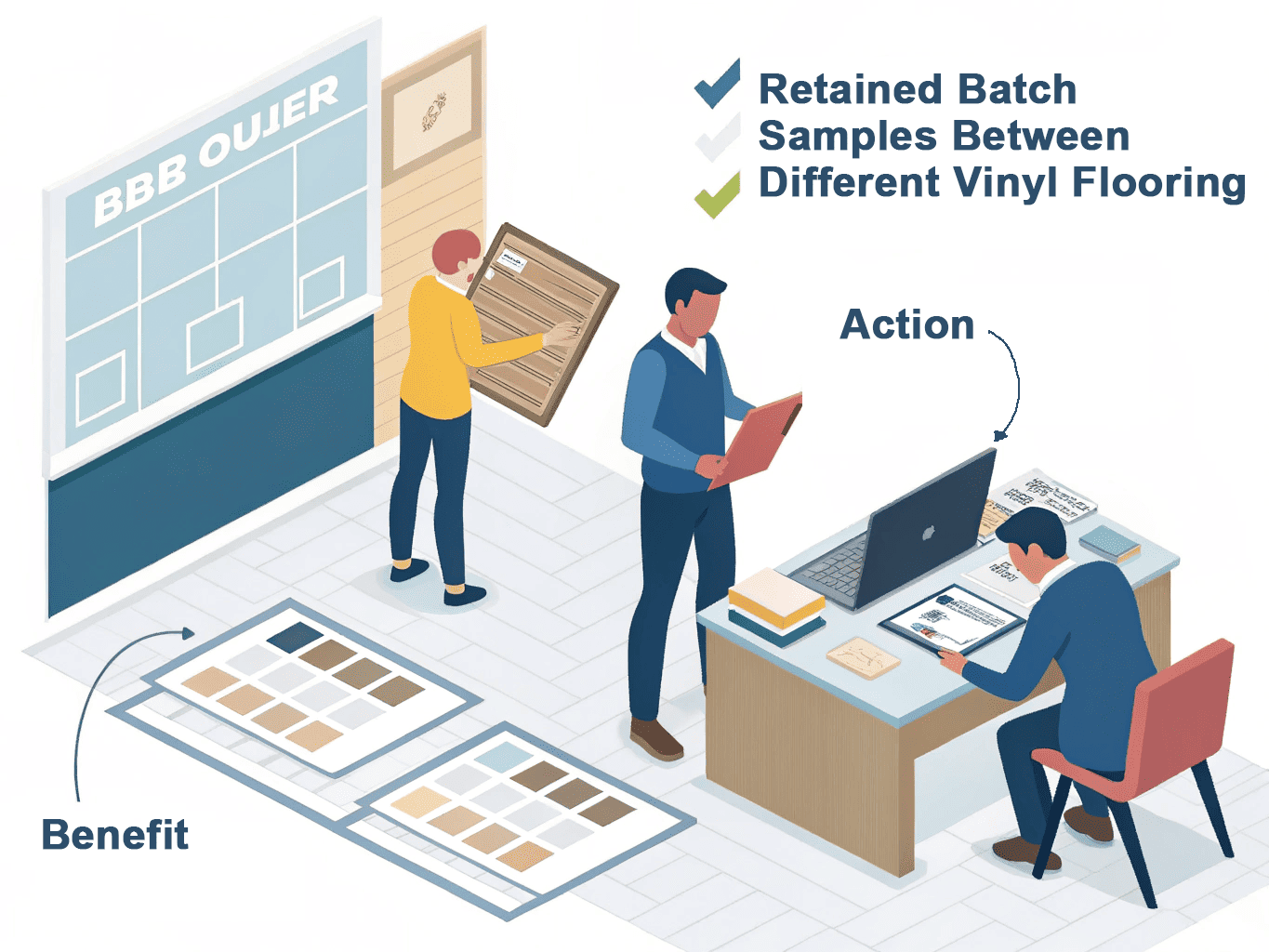
Using retained samples is a simple yet powerful quality control method. Consider Lori in the United States, who has faced quality discrepancies. When a new SPC flooring shipment arrives, she can compare it directly with a sample from a previously approved batch. This allows for immediate visual comparison of color, pattern, and finish. She can also check texture, measure thickness, and test the click system on a sample piece if it’s SPC.
My factory often sends pre-shipment samples for final approval. These then become the buyer’s retained samples. This practice bridges communication gaps and ensures quality expectations are met. For example, if a client approved a specific gloss level, having that sample makes verifying the new batch easy. It’s an objective way to catch discrepancies before they impact distribution.
Here’s a breakdown of how to maximize the effectiveness of retained samples:
| Step | Action | Benefit |
|---|---|---|
| 1. Sample Acquisition | Request samples from the actual production run of your first approved order, not just showroom samples. | Ensures the benchmark reflects true production quality. |
| 2. Proper Labeling | Label each sample clearly with order number, production date, and batch details. | Enables easy identification and traceability for future comparisons. |
| 3. Controlled Storage | Store samples in a stable environment, away from extreme temperatures or light. | Prevents environmental degradation that could alter appearance or properties. |
| 4. Comparison Protocol | Select random pieces from new batches and compare them side-by-side with retained samples under consistent lighting. | Provides an objective basis for visual and tactile quality assessment. |
| 5. Documentation | Record any observed discrepancies with detailed notes and high-quality photos . | Creates objective evidence for discussions and negotiations with suppliers. |
Should buyers establish clear quality tolerance limits with their Chinese vinyl flooring suppliers beforehand?
Are you tired of subjective quality debates with your suppliers? This ambiguity often leads to frustrating delays and compromises.
Yes, buyers should absolutely establish clear quality tolerance limits1 with their Chinese vinyl flooring suppliers beforehand. Defining these limits prevents misunderstandings, aligns both parties on a common quality benchmark, and provides a clear basis for accepting or rejecting a shipment.
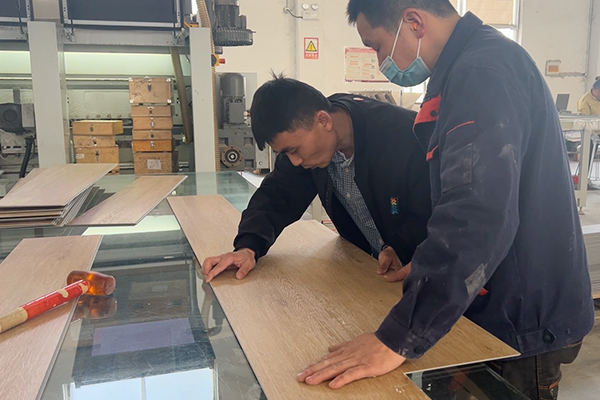
Establishing clear tolerance limits is a critical proactive measure. Aiden, a buyer in the UK, is very quality-sensitive but also seeks competitive pricing. Without defined limits, what he sees as a minor flaw, his supplier might deem acceptable. This leads to disputes and missed sales seasons. For example, a color tolerance can be specified as "no more than a 2-Delta E difference" when measured with a spectrophotometer. For wear layer thickness, it could be "+/- 0.05mm".
At CloudsFlooring, we encourage our B2B clients to discuss these specifics upfront. We can provide our internal QC standards, but it’s more effective when buyers articulate their exact needs based on their market . This includes details on acceptable levels of surface scratches, edge chipping, or pattern repeats. Incorporating these limits into the contract makes them legally binding, ensuring both the factory and the buyer are aligned on product quality. This shifts discussions from subjective opinions to objective measurements, crucial for strong, long-term partnerships.
Here are examples of critical tolerance limits for vinyl flooring:
| Quality Aspect | Example Tolerance Limit | Measurement Method | Importance |
|---|---|---|---|
| Color Difference | Delta-E < 2.0 (between batches) | Spectrophotometer | Ensures consistent visual branding and aesthetic |
| Thickness | +/- 0.1 mm for total thickness | Digital Calipers | Affects installation fit and structural integrity |
| Wear Layer | Min. 0.3mm (LVT), Min. 0.5mm (SPC) | Micrometer | Directly impacts product durability and lifespan |
| Dimensional Stability | Max. 0.15% change after heat exposure | Standardized testing (e.g., EN 434) | Prevents gapping, curling, and buckling post-installation |
| Squareness | Max. 0.5mm deviation over 1 meter length | L-Square and measuring tape | Crucial for precise and gap-free installation |
| Surface Flatness | Max. 0.5mm unevenness over 1 meter length | Straight edge and feeler gauge | Affects visual appeal and underfoot comfort |
| Scratch Resistance | Pass specified Taber Abrasion Test cycles | Taber Abraser | Indicates resilience to everyday wear and tear |
| Edge Chipping | No visible chips > 0.3mm at edges | Visual inspection, magnified glass | Ensures clean joints and prevents premature damage |
| Interlock Strength | Minimum kN (kilonewtons) for click systems | Tensile testing machine | Guarantees secure and durable plank connections |
Conclusion
To secure product consistency, B2B buyers must prioritize detailed purchase orders, utilize retained batch samples effectively, and set clear quality tolerance limits. These steps build strong supplier relationships and guarantee product quality.
-
Understanding quality tolerance limits is essential for maintaining product standards and avoiding disputes with suppliers. ↩